


Electric Vehicle Charger vs Charging Station: What’s the Difference and Which One Do You Need?
The electric vehicle (EV) charging market is experiencing exponential growth, especially in the small EV segment, which includes electric motorcycles, tricycles, and popular vehicles like the Tuk Tuk. With the rapid increase in EV adoption, a fundamental and crucial question arises:
Many people confuse an EV charger with an EV charging station—are they the same thing?
The answer is no. While both devices deliver energy to the vehicle, their function, application scenarios, and technical complexity are worlds apart. For any individual or business (B2B, fleet operators, dealers, or contractors) considering the procurement, deployment of an EV fleet, or construction of a public charging network, understanding the core difference between the two is vital. It directly impacts your charging safety, operational efficiency, and long-term cost of ownership.
I. What Is an Electric Vehicle Charger (EV Charger)?
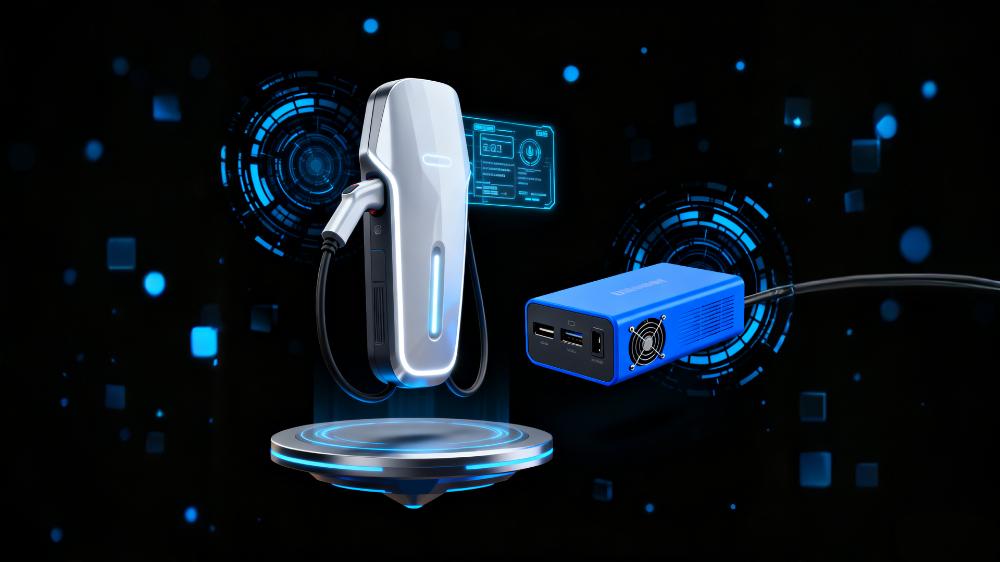
An EV Charger is a relatively simple, self-contained power conversion device. Its core function is to safely convert AC (Alternating Current) power from a household grid into DC (Direct Current) power, which is required by the battery.
1.1 Definition and Basic Function
For low-speed electric vehicles like motorcycles, tricycles, and Tuk Tuks, a charger typically features:
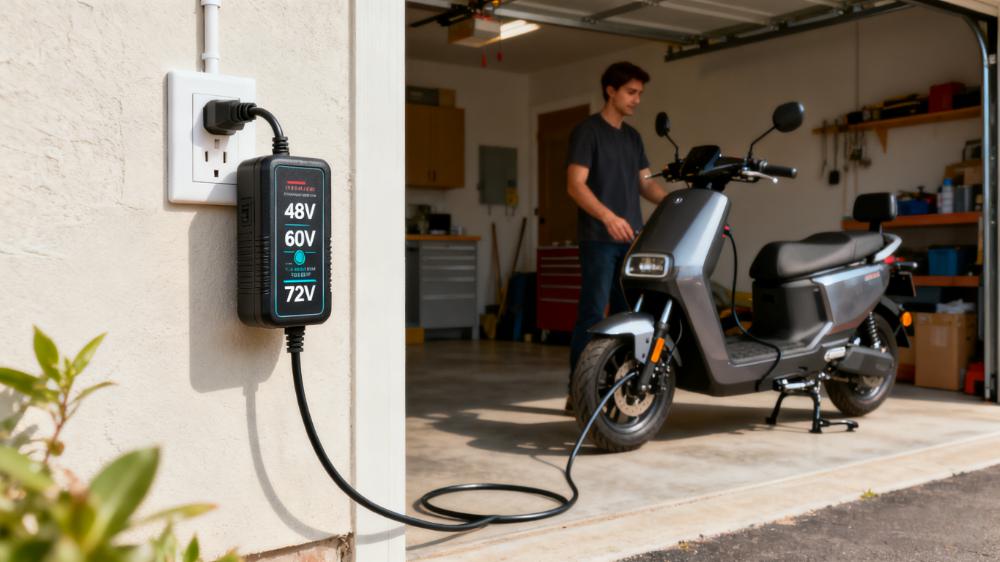
- Voltage Output: Primarily supports low-voltage systems such as 48V, 60V, or 72V.
- Installation Format: Most are portable external units or integrated within the vehicle (on-board chargers).
- Function: Serves only as a power converter and a basic current control unit.
1.2 Pros and Cons of EV Chargers
| Advantages (Pros) | Limitations (Cons) |
| ✅ Low Cost: Affordable for individual users. | ❌ Slow Charging: Low power output (0.5 kW – 2 kW), typically requiring several hours for a slow charge. |
| ✅ High Portability: Easy to carry and use in various locations. | ❌ Single-Vehicle Use: Cannot be scaled or expanded for multiple vehicles. |
| ✅ Plug-and-Play: Requires no professional installation; plugs directly into standard sockets. | ❌ No Management: Usually lacks monitoring, metering, or remote control features. |
Summary: The EV charger is an ideal portable EV charger for electric motorcycles and electric tricycles, best suited for home or personal overnight charging.
II. What Is an EV Charging Station (Charging Station)?
An EV Charging Station (or Charging Pile/Hub) is a complete power supply and management infrastructure system. It is much more than a simple converter; it is a fixed installation designed for simultaneous power supply to multiple vehicles and equipped with complex smart control capabilities.
2.1 Definition and Core Function
The goal of a charging station is to achieve high utilization, superior safety, and commercial viability. Its key components include:
- Power Distribution and Control Unit: Manages power input and output distribution, ensuring multiple Tuk Tuks or electric vehicles charge safely at the same time.
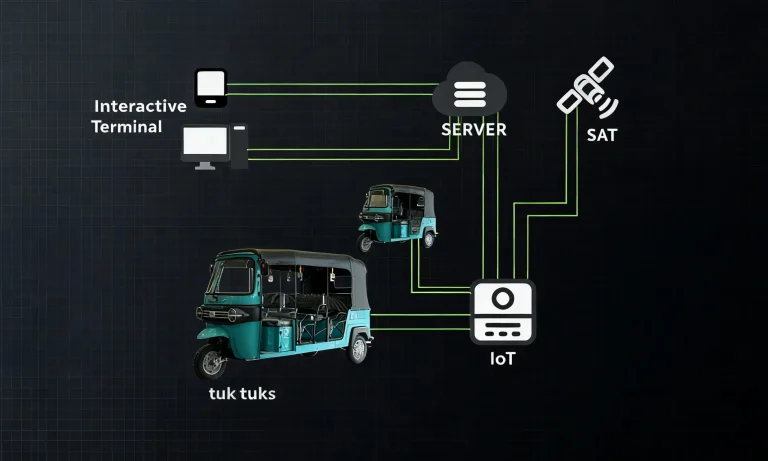
- Control and Monitoring System: Built-in communication modules (such as the OCPP protocol) enable remote diagnostics and status monitoring.
- User Management and Payment System: Supports card, QR code, or app payments, which are crucial for commercial metering and revenue generation.
2.2 Pros and Cons of Charging Stations
| Advantages (Pros) | Limitations (Cons) |
| ✅ Speed & Efficiency: Higher power output (1.5 kW – 15kW+) ensures faster charging turnaround. | ❌ Higher Cost: Significant initial investment, classified as infrastructure expenditure. |
| ✅ Multi-Vehicle Support: Can serve multiple EVs or fleets simultaneously. | ❌ Installation Required: Fixed installation necessitating professional electrical expertise. |
| ✅ Smart Management: Remote monitoring, fault diagnostics, smart metering, and billing. | ❌ Maintenance Required: Requires periodic maintenance and monitoring as a fixed asset. |
Summary: The EV charging station is the essential EV charging equipment for achieving smart EV charging for small EV fleets and public locations.
III. Key Differences: EV Charger vs Charging Station
The table below clearly outlines the key differentiating factors between a charger vs charging station when making a purchasing decision:
| Feature | EV Charger (Portable) | EV Charging Station (Fixed) |
| Core Function | Single-vehicle AC | Multi-vehicle Power Management and Smart Control |
| Power Output | 0.5 kW – 2 kW (Slow Charge) | 1.5 kW – 15 kW+ (Fast/Smart Charge) |
| Scalability | None | High, can manage multiple ports for fleet scaling |
| Smart Control | Minimal or None | Yes (Remote monitoring, metering, payment) |
| Installation | Plug-and-play | Fixed installation, requiring professional electrician |
| Target User | Individuals, Home Users | Fleet Operators, Dealers, Commercial Venues |
Understanding the difference between EV charger and charging station is crucial for planning an EV fleet charging solution.
IV. Which One Should You Choose? – Applications and Cost Considerations
You must match the charging equipment to your operational scale and needs.
4.1 For Individual Owners or Home Use
Recommendation: EV Charger
If you own a single electric motorcycle or Tuk Tuk and prioritize convenience and low cost, a portable EV charger is the best choice. It meets your overnight slow charging needs without infrastructure investment.
4.2 For Fleet Operators, Logistics Companies, or Commercial Sites
Recommendation: EV Charging Station
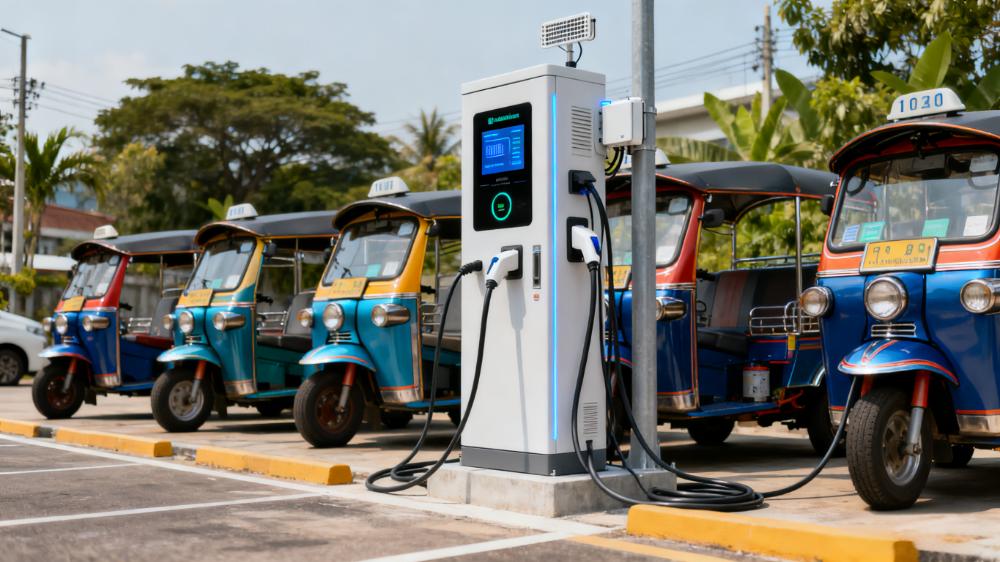
For businesses operating a fleet of electric tricycles, electric Tuk Tuk fleets, or planning to offer paid charging services, the EV charging station is the only correct choice. Choosing a charging station offers:
- Maximized Efficiency: Ensures vehicles are quickly back on the road, boosting fleet utilization and operational range.
- Achieving ROI: Smart metering and billing features transform the charging station from a cost center into a revenue generator.
- Guaranteed Safety: Industrial-grade safety protection and remote monitoring mitigate safety and management risks in commercial operations.
Cost and ROI Consideration: While the initial cost of an EV charging station is higher, the long-term operational benefits for B2B users far outweigh the investment.
V. Safety, Efficiency, and Battery Health: Why Specialized Equipment Matters
The low-voltage battery systems (typically 48V, 60V, or 72V) used in electric motorcycles and Tuk Tuks require highly precise charging voltage and current. Using inappropriate or non-specialized equipment can severely damage battery health.
- Battery Life Protection: Professionally designed 72V charger or charging station models offer delicate over-voltage/over-current protection, which is crucial for extending battery lifespan.
- High-Efficiency Charging: Charging stations can dynamically adjust output based on battery status to achieve the fastest possible safe charging speed.
- Public Safety: In commercial or public areas, fixed charging stations provide superior grounding and safety features, far exceeding the safety level of portable chargers.
VI. Future Trends and Conclusion in Small EV Charging
| Device | Best Application | Key Value |
| EV Charger | Individual Home Use | Portable, low-cost, meets personal slow-charging needs. |
| EV Charging Station | Commercial Fleets & Public Networks | High efficiency, smart management, safety, and essential for commercial profit and scaling. |
Choosing the right EV charging equipment is the cornerstone of your electrification success. Whether for personal safety or commercial profitability, invest in the charging solution that best matches your needs and scale.
FAQ
What is the key difference between an EV charger and a charging station?
The EV charger is an AC – DC converter primarily for single-vehicle slow charging; the charging station is a complete power supply infrastructure for multi-vehicle, fast, smart management, and commercial billing.
Can I use a charging station to charge my Tuk Tuk or electric motorcycle?
Yes. Professional Tuk Tuk charging station models often provide dedicated charging ports and protocols designed specifically for 48V/60V/72V small EVs.
Which is faster—a charger or a charging station?
The charging station is significantly faster. Chargers typically have power outputs below 2kW; a charging station can offer 15kW+ of power (or simultaneous multi-port charging), drastically reducing turnaround time.