


Tuk Tuk vs Tricycle: Key Differences You Should Know
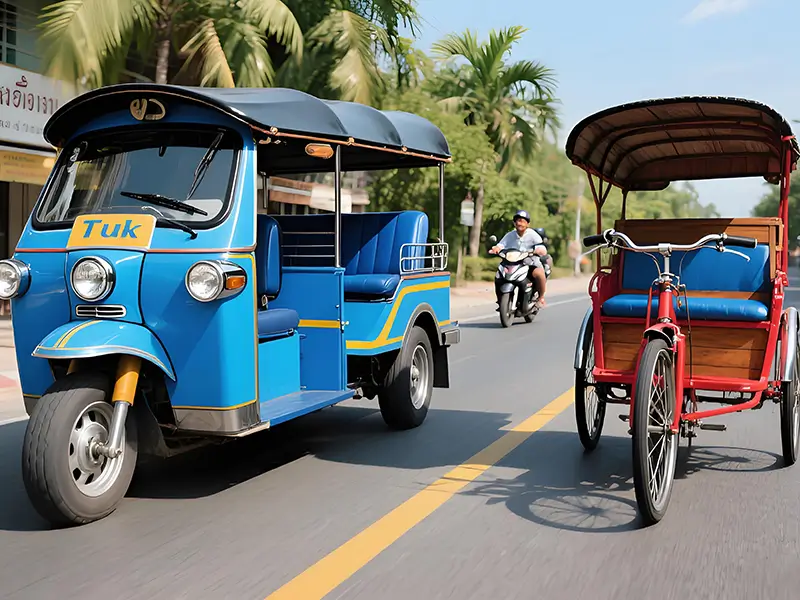
Both tuk-tuks and tricycles are three-wheeled vehicles, but there are important differences in their design, function, and typical usage. Understanding these differences is essential, especially for businesses or travelers considering which vehicle fits their needs. This article compares tuk-tuks and tricycles, highlighting their features, advantages, and common applications.
Tuk Tuk of Tuk Tuk vs Tricycle
- Motorized (including electric): Traditionally powered by small gasoline engines like motorcycles or scooters, but modern tuk-tuks also come in fully electric versions.
- Passenger transportation: Mainly used as taxis or for passenger transport in Asia, Africa, and parts of Latin America.
- Semi-enclosed design with canopy: Features a covered roof and partial side panels, offering protection from rain and sun while maintaining an open-air rear seating area.
- Maneuverability: Compact and agile, ideal for navigating narrow streets and heavy traffic.
- Cultural significance: Tuk-tuks are often iconic, vibrantly decorated, and featured in local media.
- Regional names: Also called “auto rickshaw,” “mototaxi,” “bajaj,” “keke,” or “CNG,” depending on the region.
Tricycle of Tuk Tuk vs Tricycle
- Human-powered or electric: Traditionally pedal-powered, but many modern tricycles include electric assist or are fully electric.
- Diverse uses: Used for recreation, exercise, personal transport, and cargo hauling, with broader applications worldwide.
- Stability: More stable than bicycles due to three wheels, suitable for children, older adults, or those with balance issues.
- Cargo capacity: Some designs have heavy-duty baskets or enclosed compartments for goods.
- Variations: Include upright, recumbent, cargo, or drift tricycles, with delta or tadpole wheel configurations.
- Example: In the Philippines, motorized tricycles combine a motorcycle with a passenger sidecar.
Summary: Tuk Tuk vs Tricycle
In the Tuk Tuk vs Tricycle comparison, tuk-tuks are primarily motorized vehicles (including electric versions) used for passenger transport, featuring a semi-enclosed canopy for protection from weather. Tricycles, on the other hand, are often pedal-powered or electric-assisted, used for a wider range of personal, recreational, or commercial purposes, emphasizing stability and versatility.
By understanding the differences between a tuk-tuk and a tricycle, businesses and individuals can choose the right three-wheeled vehicle for their transportation or commercial needs.
FAQ
Are electric tuk tuks more cost-effective than traditional motorized tricycles?
Yes. Electric tuk tuks can reduce fuel and maintenance costs over time, making them attractive for operators in tourism, last-mile transport, and urban commuting. Motorized tricycles may have lower initial costs but often involve higher running expenses in the long term.