


How Fast is a Tuk Tuk
Tuk tuks, also known as auto rickshaws or three-wheelers, are widely used in Southeast Asia, South Asia, and parts of Africa. With the rise of electric mobility and growing demand for last-mile delivery, tuk tuks are increasingly adopted in new global markets.
How fast does a tuk tuk go? That’s a common question among buyers, operators, and fleet managers. But speed isn’t just about performance—it directly impacts safety, battery life, regulatory compliance, and service quality.
This article offers a comprehensive overview of how fast tuk tuks can go, what factors influence their speed, how regulations apply, and how to choose the right speed-balanced model for different use cases.
Powertrain & Structural Basics: Speed Depends on Design
Tuk tuks typically come in two main drive systems: fuel-powered and electric. Their top speeds vary considerably.
● Fuel-Powered Tuk Tuks:
- Common engine size: 150cc–200cc
- Top speed: 90–96 km/h (56–60 mph)
- Suitable for highways, suburbs, or long-distance travel
● Electric Tuk Tuks:
- Motor rating: 1.5kW to 4kW, usually 60V or 72V systems
- Top speed: 45–60 km/h (28–37 mph)
- Ideal for city traffic and tourist zones due to low noise and maintenance
However, because of their three-wheel structure, tuk tuks have inherent stability limitations at higher speeds. Therefore, most are engineered for a balance between speed, safety, and regulation.
What Affects How Fast a Tuk Tuk Can Go?
1. Technical Specs
- Motor/Engine Power – More watts or cc = higher top speed
- Battery Capacity & Voltage – Determines sustainable speed under load
- Weight & Payload – Heavier loads reduce acceleration and hill-climbing ability
2. Road & Traffic Conditions
- Urban settings with traffic lights = average speed of 20–30 km/h (12–18 mph)
- Suburban roads allow up to 45–55 km/h (28–34 mph)
- Steep inclines or unpaved roads slow down performance
3. Legal & Safety Limits
- Thailand: Most cities enforce a 45 km/h (28 mph) limit on tuk tuks
- India: Auto rickshaws may be banned from highways or high-speed zones
Legal restrictions shape the maximum speed capabilities and where each tuk tuk model is allowed to operate.
The Speed–Battery Tradeoff in Electric Tuk Tuks
● Why Faster Isn’t Always Better
High speeds increase aerodynamic drag and motor current, causing:
- Rapid battery depletion
- Overheating issues
- Reduced battery lifespan
- Strain on cooling systems and components
● Optimal Speed Range for Daily Operation
Based on fleet testing and operational feedback, the ideal efficiency speed for electric tuk tuks is:
- 35–45 km/h (22–28 mph)
- This range ensures optimal energy use, minimal wear, and system reliability
● Real-World Example: Speed Specs by Model
| Model | Max Speed | Recommended Operation Speed |
|---|---|---|
| Mahindra Treo | 55 km/h | 40 km/h |
| Piaggio Ape E-City | 45 km/h | 35–40 km/h |
| E5 (our model) | 45 km/h | 35–40 km/h |
| E6 | 50 km/h | 40–45 km/h |
| E6L | 55 km/h | 45–50 km/h |
| E7 | 55 km/h | 45–50 km/h |
Our product line offers options tailored to different operating needs:
- E5 for energy-efficient urban routes
- E6 for scenic transport and medium-range delivery
- E6L & E7 for outer-city trips or high-efficiency tourism mobility
Ultimately, the key isn’t just how fast a tuk tuk can go, but how efficiently it runs within a smart speed range.
Speed Performance in Different Use Scenarios
● Urban Commuting & City Rides
- Traffic congestion limits actual speed
- Average real-world speed: 20–30 km/h
● Suburban & Tourist Transfers
- Clearer roads allow for 45–50 km/h cruising speeds
- Suitable for shuttle services and hotel logistics
● Impact of Full Load Operations
- Carrying passengers or cargo reduces top speed
- Field tests show 10–15% drop in average speed under full load
Strategies to Improve Tuk Tuk Speed Performance
Choose the Right Model for the Use Case
- Urban commuting: 40 km/h max models with extended battery life
- Suburban transport: Mid-speed 60 km/h models
- Tourism: Speed + comfort + visual appeal
Advocate for Speed Classification Standards
- Propose regulatory speed categories like:
- Low-Speed (<40 km/h): For urban-only use
- Medium-Speed (<60 km/h): For suburban routes
- High-Speed (70+ km/h): For reinforced, special-use three-wheelers
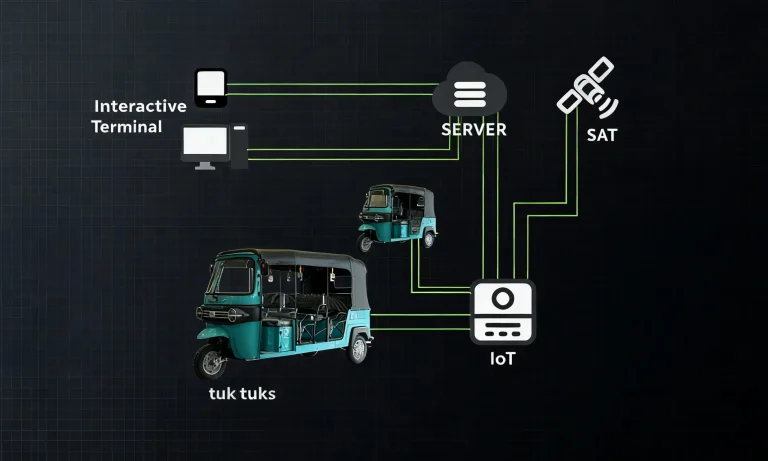
Use Smart Tech to Balance Speed & Efficiency
- GPS fleet dispatching to avoid traffic jams
- Real-time energy monitoring to manage battery load
- AI-assisted eco-driving for smoother acceleration and reduced consumption
Conclusion: Finding the Right Speed for Safety, Efficiency & Compliance
How fast is a tuk tuk?
It’s not just about the number—it’s about how that number fits into safety, sustainability, and operational value.
Tuk tuk speed affects:
- Range and charging frequency
- Risk management
- Regulatory compliance
- Rider satisfaction and turnaround efficiency
When selecting or operating tuk tuks, businesses should consider the “Speed–Energy–Safety–Compliance” equation to build reliable, eco-conscious mobility networks that meet modern transport needs.
FAQ
Can the speed of an electric tuk tuk be increased?
Technically, yes—but it’s not recommended. Adjusting the motor controller, battery, or gear ratio may raise the top speed of an electric tuk tuk. However, this can:
- Void the manufacturer’s warranty
- Cause overheating and reduce battery life
- Compromise safety and braking performance
- Make the vehicle non-compliant with road regulations
For commercial use, we recommend choosing a model with a factory-tested speed such as E6L (55 km/h) or E7 (55 km/h) for optimal reliability.
Can the speed of an electric tuk tuk be increased?
Technically, yes—but it’s not recommended. Adjusting the motor controller, battery, or gear ratio may raise the top speed of an electric tuk tuk. However, this can:
- Void the manufacturer’s warranty
- Cause overheating and reduce battery life
- Compromise safety and braking performance
- Make the vehicle non-compliant with road regulations
For commercial use, we recommend choosing a model with a factory-tested speed such as E6L (55 km/h) or E7 (55 km/h) for optimal reliability.